
7 Best Credit Card & Reward Apps in India (2026): A Tech, UI & Security Review
Published on: November 1, 2026 Category: Tech Guides / FinTech
The Indian financial ecosystem has undergone a massive paradigm shift. While UPI remains the undisputed king of micro-transactions, the adoption of premium credit cards has exploded in 2026. From lifestyle benefits and airport lounge access to massive cashback rewards on e-commerce, Indian consumers are actively leveraging credit to maximize their purchasing power.
However, with great purchasing power comes a significant logistical headache. Managing billing cycles, tracking hidden fees, remembering payment due dates, and figuring out how to redeem complex reward points across three or four different cards can quickly become overwhelming.
This is where modern financial technology steps in. A new generation of Android applications has emerged, designed specifically to aggregate your credit cards, automate your payments, and gamify your rewards. But because these apps require deep access to your banking data and email statements, choosing a platform with bulletproof mobile security and a flawless User Interface (UI) is non-negotiable.
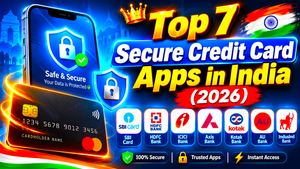
In this comprehensive, deep-dive tech guide, we review the 7 best credit card apps in India for 2026. We will analyze their backend API integrations, their UI/UX design philosophies, their reward structures, and the critical Android security protocols that keep your financial identity safe from hackers.
The Tech Behind the Apps: How Android Secures Your Cards
Before we review the specific applications, it is crucial to understand how modern Android apps manage your credit card data securely in 2026. The days of apps saving your 16-digit card number in plain text on a server are long gone, thanks to strict mandates from the Reserve Bank of India (RBI).
1. Card Tokenization (The RBI Mandate)
Every top-tier finance app now uses Network Tokenization. When you add your HDFC or SBI credit card to an app like CRED or Google Wallet, the app does not store your actual card number. Instead, it sends the details to the card network (Visa, Mastercard, or RuPay), which generates a unique, encrypted digital “token.” This token is bound specifically to your Android device and that specific app. If a hacker breaches the app’s servers, they only find useless tokens, not your real credit card numbers.
2. NFC and HCE (Host Card Emulation)
Many of the apps on this list support “Tap-to-Pay.” This utilizes the NFC (Near Field Communication) chip inside your Android smartphone. Using HCE technology, the Android OS creates a secure, virtual vault that talks directly to physical Point of Sale (POS) machines, allowing you to pay at Starbucks or Reliance Smart by simply tapping your phone against the machine, without ever opening your wallet.
3. Email Parsing APIs
Apps like CRED and Cheq ask for permission to read your emails. They do not read your personal conversations. Instead, they use specialized, read-only APIs that scan exclusively for PDF statements from recognized banking domains (like @hdfcbank.net). The algorithm extracts the “Total Amount Due” and “Due Date,” presenting it to you in a clean UI.
1. CRED: The Undisputed King of UI/UX
Founded by Kunal Shah, CRED is no longer just a startup; it is a cultural phenomenon in India’s FinTech space. Designed exclusively for individuals with high credit scores (typically 750+), CRED’s primary function is paying your credit card bills, but its true appeal lies in its unmatched application design.
Tech & UI Highlights:
- The “Neumorphic” Dark Mode UI: CRED is widely considered one of the most beautifully designed apps on the Google Play Store. It heavily utilizes neumorphism—a design trend that makes buttons and UI elements look like they are physically popping out of the screen using clever shadowing. Combined with a pure black dark mode and ultra-smooth 120Hz micro-animations, the app feels incredibly premium.
- Instant Settlement Backend: While traditional bank transfers (NEFT/IMPS) can take hours to reflect on a credit card statement, CRED uses deep API integrations with major Indian banks. For most cards, a bill paid on CRED instantly clears the bank’s ledger, preventing accidental late fees.
- CRED Coins & Jackpots: The app gamifies bill payments. Every rupee you pay toward your bill earns you a “CRED Coin.” You drag a virtual slot machine lever to burn these coins for cashback, or use them in the CRED Store to buy premium D2C (Direct to Consumer) brands at a discount.
Best For: High-credit-score individuals who value premium app design, instant settlements, and lifestyle rewards.
2. Cheq: The Cross-Platform Rewards Challenger
While CRED focuses on premium exclusivity, Cheq (launched by former navigation and tech executives) has rapidly emerged in 2026 as the most formidable challenger, offering a more transparent reward system for managing multiple forms of credit.
Tech & UI Highlights:
- Unified Credit Dashboard: Cheq doesn’t just track your credit cards. Its backend seamlessly integrates with your “Buy Now Pay Later” (BNPL) accounts (like Amazon Pay Later or LazyPay) and active EMI loans. This gives you a holistic, single-screen view of every single rupee you owe across the entire financial ecosystem.
- Cheq Chips (1% Flat Value): One of the biggest criticisms of CRED is the randomized, slot-machine cashback. Cheq solves this with a highly transparent tech logic: you get 1% back as “Cheq Chips” on every bill payment. The UI clearly shows exactly what those chips are worth when converted to Swiggy, Amazon, or Myntra vouchers.
- Lightweight Android Architecture: Unlike CRED, which has become a massive “Super App” encompassing travel and e-commerce, the Cheq APK is significantly smaller and runs much faster on mid-range Android devices, prioritizing speed over visual flair.
Best For: Users who want guaranteed, transparent rewards and need to track BNPL accounts alongside traditional credit cards.
3. OneCard (& OneScore): The Tech-First Metal Card
OneCard flipped the traditional banking model upside down. Instead of applying for a credit card through a slow bank website and managing it with a clunky banking app, OneCard is a tech company first, partnering with banks (like Federal Bank and SBM) to issue a physical metal credit card controlled entirely by their proprietary Android app.
Tech & UI Highlights:
- App-Centric Card Controls: The OneCard app is the remote control for your physical card. The UI allows you to instantly lock the card, disable international transactions, set specific limits for NFC tap-to-pay, and view your virtual card details with a single biometric scan. The real-time control is miles ahead of legacy bank apps.
- OneScore Integration: The companion app, OneScore, offers a completely ad-free, spam-free credit score tracker (CIBIL and Experian). The app uses an intelligent algorithm to simulate how specific actions (like closing a card or applying for a loan) will impact your score in the future.
- Fractional Rewards System: The app features a highly dynamic rewards section that tracks your top two spending categories each month (e.g., Dining and Groceries) and automatically applies a 5x multiplier to the points earned in those categories.
Best For: Millennials and Gen-Z users who want a stunning metal card, zero annual fees, and complete app-based control over their spending limits.
4. Google Wallet (India Edition): The Tap-to-Pay Master
While Google Pay (GPay) is the king of UPI in India, Google formally launched the Google Wallet app in India to focus specifically on card tokenization, loyalty programs, and NFC payments. It is a separate, highly specialized APK.
Tech & UI Highlights:
- Flawless NFC Integration: Because the Android OS is built by Google, Google Wallet has the lowest latency of any Tap-to-Pay app on the market. Once you tokenize your SBI, Axis, or HDFC credit card in the app, you can pay at terminals without even opening the app—just wake your phone screen and tap.
- Smart Boarding Passes & Tickets: The app features deep OS integration with Gmail. If you receive an Indigo flight ticket or a BookMyShow movie ticket via email, Android automatically extracts the barcode and generates a digital pass inside Google Wallet, complete with a lock-screen widget that appears when you arrive at the airport.
- Loyalty Card Aggregation: The UI allows you to scan the physical barcodes of your Shoppers Stop, Reliance, or Starbucks loyalty cards, digitizing them so you never have to carry plastic loyalty cards again.
Best For: Users with NFC-enabled Android phones who want the fastest possible Tap-to-Pay experience and digital ticket management.
5. SBI Card: The Best Traditional Bank App
Historically, apps built directly by massive, legacy banks were terrible—plagued by slow load times, frequent crashes, and confusing navigation. However, the SBI Card app (managed separately from the main SBI YONO banking app) has received massive technological overhauls for 2026, making it the best standalone credit card app offered by a traditional Indian bank.
Tech & UI Highlights:
- Flexipay (Instant EMIs): The app features a highly robust backend engine for converting massive purchases into EMIs. Within seconds of swiping your card for a new laptop, you can open the app, select the transaction, and view a dynamically calculated EMI table with exact interest rates, converting it with one tap.
- E-Store API Integrations: The SBI Card app has deep API tie-ups with brands like MakeMyTrip, Amazon, and Flipkart. You can generate instant discount vouchers or book flights directly within the app’s “E-Store” to utilize exclusive cardholder discounts.
- E-Statement Analyzer: The app features a built-in PDF analyzer that generates pie charts of your monthly spending, categorizing it accurately without requiring you to grant email reading permissions to third-party startups.
Best For: SBI Cardholders who want deep, reliable control over their card services and instant EMI conversions without relying on third-party aggregators.
6. Tata Neu: The Co-Branded Super App
The Tata Group’s “Super App” ambition has fully matured in 2026. While Tata Neu is an e-commerce platform for everything from Air India flights to BigBasket groceries, its integration with the Tata Neu HDFC Credit Card makes it an absolute powerhouse for reward management.
Tech & UI Highlights:
- NeuCoins Architecture: The app operates on a closed-loop digital currency called NeuCoins (1 NeuCoin = ₹1). If you link the co-branded HDFC credit card, the app’s UI dynamically updates to show you earning up to 10% back on Tata brands.
- Seamless Redemption: The technological magic of Tata Neu is the checkout process. Because the app, the payment gateway, and the rewards ledger are all housed in the same ecosystem, applying your earned NeuCoins to pay for a Starbucks coffee or a 1mg pharmacy order is completely frictionless and instant.
- Unified Bill Payments (BBPS): The app utilizes the Bharat Bill Payment System (BBPS) API, allowing you to pay your electricity, water, and broadband bills using your credit card, automatically tracking the payments in the app’s dashboard.
Best For: Deeply entrenched Tata ecosystem customers (Croma, BigBasket, Air India) who hold the co-branded HDFC card.
7. HDFC MyCards (Progressive Web App)
HDFC is the largest credit card issuer in India, but historically, their mobile app experience was fragmented. In 2026, rather than forcing users to download a bloated APK, HDFC perfected the MyCards Progressive Web App (PWA).
Tech & UI Highlights:
- No APK Required: This is a triumph of modern web technology. You access MyCards via your Android browser, but you can “Add to Home Screen.” It functions exactly like a native app (complete with icons and full-screen UI) but takes up zero storage space on your device.
- Instant Reward Redemption: The PWA is incredibly lightweight and allows HDFC users to instantly view their unbilled transactions, control their online/international spending limits, and most importantly, redeem their HDFC Reward Points directly for statement credit or flight vouchers without navigating the notoriously clunky main NetBanking portal.
Best For: HDFC customers who want instant access to card controls without downloading heavy, traditional banking applications.
Critical Security Practices for Credit Card Apps
Because these apps aggregate your spending history, bill amounts, and tokenized card data, they are prime targets for cybercriminals. Follow these mandatory security rules in 2026:
1. ONLY Download from the Google Play Store
This is the absolute golden rule of mobile FinTech. Never, under any circumstances, download a financial app (like CRED, Cheq, or Google Wallet) from a third-party APK website. While APK sites (like ours) are fantastic for games, video editors, and social media tools, downloading banking apps outside of the Play Store exposes you to extreme risk. Hackers frequently create “clones” of apps like CRED, injecting them with keyloggers that steal your credit card numbers the moment you type them in. Always use official app stores for finance.
2. Lock Down Your Email Permissions
Apps like CRED require access to your Gmail to read your credit card statements.
- The Safe Way: Ensure the app only requests restricted, read-only API access to specific domains.
- The Audit: Periodically go to your Google Account Settings -> Security -> Third-party apps with account access, and review which financial apps have access to your inbox. Revoke access for any app you no longer actively use.
3. Avoid Screen-Sharing Scams
A prevalent scam in 2026 involves fraudsters calling you, claiming there is an “issue with your credit card reward points.” They will ask you to download a screen-sharing app (like AnyDesk or TeamViewer) to “help you fix it.” Never do this. Once they can see your screen, they will ask you to open your credit card app, allowing them to view your virtual card number, CVV, and intercept the OTP (One Time Password) sent via SMS, draining your card limit in seconds.
4. Utilize Biometric App Locks
Do not rely solely on your phone’s lock screen. Go into the settings of CRED, Cheq, or OneCard and enable the internal App Lock feature. This forces the app to require a fingerprint or Face ID scan every single time it is opened, ensuring that if you hand your unlocked phone to a friend or child, your financial data remains inaccessible.
Conclusion
Managing multiple credit cards in India doesn’t have to result in missed due dates and lost reward points. By leveraging the AI, email parsing, and brilliant UI design of apps like CRED, Cheq, and OneCard, you can automate your financial life while squeezing every bit of value out of your spending. Just remember: in the world of mobile finance, convenience must always be paired with uncompromising digital security.
Leave a Comment